

Landscape Installation
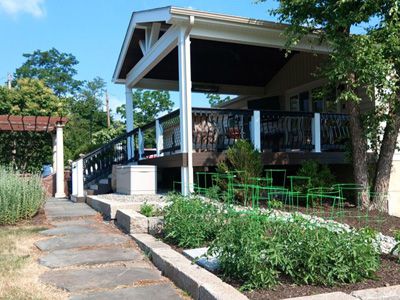 Landscape installation is the process of turning an approved plan into a completed outdoor environment. Proper preparation and installation help ensure that planting beds, trees, shrubs, lawns, and finishing materials are positioned correctly and have suitable conditions to establish.
Piracci's Landscaping, Inc. provides professional landscape installation throughout Eastern Pennsylvania. Our team handles site preparation, soil improvement, planting, lawn establishment, edging, mulch, final grading coordination, and cleanup, with installation practices suited to local soils and seasonal growing conditions.
If your property still requires a planting layout, material selections, or an overall plan, our Landscape Design services cover the planning stage before installation begins.
Preparing the Site for Installation
Before new landscape materials are installed, the site needs to be prepared for the work ahead. Existing vegetation and unwanted landscape materials may need to be removed, planting areas established, and disturbed or compacted ground prepared for new growth.Existing trees, structures, utilities, slopes, and drainage patterns are considered as work progresses so new landscape areas fit properly into the property.
Preparation is particularly important in Eastern Pennsylvania, where soil conditions can vary significantly between properties and compacted or heavy soils can restrict root growth and water movement.
Soil Preparation and Improvement
Soil provides the foundation for healthy lawns and plantings. Its condition influences drainage, moisture retention, root development, and the availability of nutrients.Depending on site conditions and the needs of the plants being installed, preparation may include loosening compacted soil, incorporating appropriate amendments, adding planting soil, or preparing individual planting areas.
This step can be especially important on properties where construction, previous grading, equipment traffic, or long-term compaction has affected growing conditions.
Creating Planting Beds
Planting beds are laid out to establish the intended shapes, spacing, and transitions between landscaped and lawn areas. The soil is prepared for the selected plant material, and bed lines are formed to create clean relationships with surrounding features.Trees, shrubs, perennials, and other plants can then be positioned within these prepared areas. Defined edging helps separate beds from adjoining lawn and gives the installation a clean, organized appearance.
Tree and Shrub Installation
Trees and shrubs are placed according to their intended locations while accounting for mature size, spacing, sunlight exposure, soil conditions, and nearby landscape features.Proper planting depth, root-zone preparation, backfilling, and initial watering are important to successful establishment. Plants also need sufficient space to develop without unnecessarily crowding neighboring plantings or structures as they mature.
Seasonal timing is an important consideration in Eastern Pennsylvania. Spring and fall often provide favorable conditions for many landscape installations, while summer heat, rainfall patterns, and approaching winter temperatures can affect watering requirements and establishment. Installation timing is considered in relation to the needs of the plant material being used.
Sod and Lawn Establishment
New lawn areas require careful ground preparation before sod or other lawn-establishment methods are completed. The soil surface is prepared and graded to create suitable growing conditions and smooth transitions with planting beds and surrounding areas.After installation, appropriate watering and early care help new grass establish roots and develop consistent coverage. Timing is also important, as temperature and moisture conditions can influence how quickly a new lawn becomes established.
Edging and Mulch
Edging and mulch provide the finishing treatment for newly installed planting beds. Defined edges create a clear separation between lawn and planted areas, while mulch gives beds a consistent finished appearance.Mulch also helps retain soil moisture, moderate soil temperatures, and reduce weed growth while new plants establish. It is applied with consideration for the plant material so excessive mulch does not build up around trunks or stems.
Final Grading and Drainage Coordination
As landscape areas are completed, final grading helps create appropriate transitions between lawns, planting beds, and existing site elevations. Attention is given to how surface water moves through newly installed areas so the landscape does not unnecessarily interfere with established drainage patterns.Eastern Pennsylvania's rainfall, slopes, and varying soil conditions make drainage awareness an important part of landscape installation. Properties requiring dedicated solutions for persistent standing water, runoff, or other drainage problems may need separate Drainage services rather than relying on landscape grading alone.
Integrating Landscape Lighting
When outdoor lighting is included in the finished landscape, its installation can be coordinated with planting and other landscape work so fixtures are appropriately positioned within the completed space.Our Landscape Lighting service covers lighting design, fixture placement, controls, and professional installation.