

Walls
 Decorative and architectural walls can give an outdoor space greater definition, character, and functionality. They can frame gardens, create built-in seating, screen unwanted views, establish boundaries between outdoor areas, and introduce color and texture into the landscape.
At Piracci's Landscaping, Inc., we incorporate decorative wall products into landscapes and outdoor living areas throughout Eastern PA. The right wall can help organize a space while coordinating with the home's architecture, surrounding hardscape, and landscaping.
Types of Decorative & Architectural Walls
Decorative walls can play several distinct roles within a landscape. Rather than treating every wall as a standalone feature, we consider how its height, location, material, and appearance relate to nearby patios, walkways, planting areas, entrances, and outdoor living features.Depending on the property and design, decorative wall products can be used to create:
- Garden walls that edge planting areas, frame gardens, and provide visual separation between different parts of the landscape.
- Seat walls that add permanent seating around patios, fire features, gathering areas, and other outdoor living spaces without requiring additional furniture.
- Privacy and screen walls that help reduce views of neighboring properties, equipment, utilities, or other areas homeowners would prefer to keep less visible.
- Accent walls that introduce an architectural element, create a backdrop for landscaping, or draw attention to a particular area of the property.
These features can also serve more than one purpose. A seat wall, for example, may define the edge of a patio while providing additional places for guests to sit. A garden or accent wall can separate spaces without completely closing them off.
For walls intended to hold back soil or address slopes, erosion, drainage, or significant grade changes, visit our Retaining Walls service page for information about structural retaining wall solutions.
Using Walls to Define Outdoor Living Areas
Decorative walls can establish clearer transitions between different parts of a landscape without requiring a fence or completely separating one space from another.Low garden walls can frame planting beds and establish clean transitions between landscaping and hardscape, while accent walls can provide a backdrop for plantings or create a focal point within a patio, entrance, or garden area. Around larger outdoor living spaces, decorative walls can also help distinguish dining, entertaining, gardening, and relaxation areas while keeping the overall landscape connected.
Walls can help individual areas feel more defined while adding architectural interest to the overall landscape.
Built-In Seating With Seat Walls
Seat walls are particularly useful in outdoor entertaining areas because they combine an architectural feature with practical seating. They can follow the perimeter of a patio, partially surround a fire feature, or provide additional seating near an outdoor kitchen or gathering space.Unlike movable chairs, a seat wall remains integrated into the layout and can make efficient use of the edges of an outdoor area. Its shape can be straight, curved, or designed to follow the geometry of the surrounding hardscape.
The wall material can also coordinate with nearby pavers and other masonry elements, helping the seating feel like an intentional part of the overall outdoor living design.
Privacy & Screening Without a Traditional Fence
Not every area that needs screening requires a full fence. Privacy and screen walls can be incorporated selectively where homeowners want to soften or block a particular view.They may be positioned around patios and seating areas or used to reduce the visibility of neighboring properties, utility equipment, service areas, or other less attractive elements of the landscape. Because these walls can be designed as architectural features, they contribute to the appearance of the space rather than functioning solely as a visual barrier.
Plantings can also be incorporated around a screen wall to soften its edges and connect it naturally with the rest of the landscape.
Choosing Wall Materials for the Overall Design
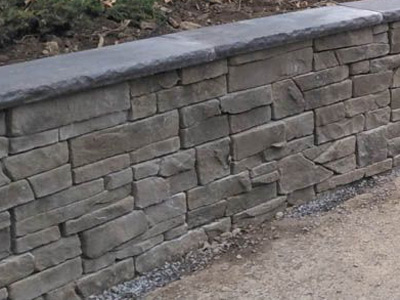
Material selection plays an important role in how a decorative wall looks and how well it relates to the rest of the property. Concrete wall products, natural stone, brick, and stone veneer each provide different combinations of color, pattern, texture, scale, and architectural character.Natural stone can introduce irregular shapes and organic textures that work well in landscapes with a more natural appearance. Brick can complement traditional architecture and provide recognizable patterns and warm color variations. Manufactured wall products offer a broad selection of shapes, finishes, and coordinated colors, while stone veneer can give walls a distinctive finished surface that ties into other masonry features.
Rather than choosing a wall material in isolation, consider the materials already present around the home. Patio pavers, walkways, steps, outdoor kitchens, masonry features, exterior finishes, and surrounding landscaping can all influence which wall product feels most appropriate.
Add Character to Your Eastern PA Landscape
A well-placed decorative wall can make an outdoor area feel more complete without overwhelming the landscape. Whether the goal is to frame a garden, add permanent seating, create privacy, or introduce an architectural focal point, Piracci's Landscaping, Inc. can help you select wall products that complement the surrounding design.To discuss garden walls, seat walls, privacy and screen walls, accent walls, or other decorative wall features for your Eastern PA property, call 215-541-9202 or submit an inquiry through our Online Form.