

Hardscape Products
Flagstone
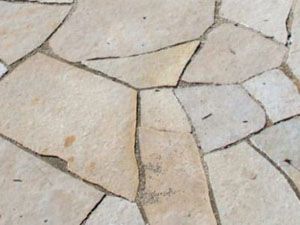 Flagstone consists of broad pieces of natural stone that can be arranged to create surfaces with a more organic, less uniform appearance than manufactured pavers. It works especially well for patios, garden paths, walkways, steps, and other areas where the landscape calls for natural texture and irregular shapes. One of its main advantages is the ability to create a surface that feels closely connected to the surrounding landscape. Flagstone may be a good fit for homeowners with traditional, rustic, woodland, or naturalistic properties who prefer stonework with individual character rather than a highly consistent pattern.
Read More About Flagstone >>
Flagstone consists of broad pieces of natural stone that can be arranged to create surfaces with a more organic, less uniform appearance than manufactured pavers. It works especially well for patios, garden paths, walkways, steps, and other areas where the landscape calls for natural texture and irregular shapes. One of its main advantages is the ability to create a surface that feels closely connected to the surrounding landscape. Flagstone may be a good fit for homeowners with traditional, rustic, woodland, or naturalistic properties who prefer stonework with individual character rather than a highly consistent pattern.
Read More About Flagstone >>
Bluestone
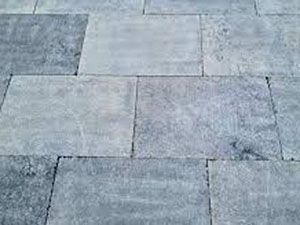 Bluestone is a dense natural stone commonly available in blue-gray, gray, and related tones, with finishes ranging from relatively smooth and consistent to more textured surfaces. It is frequently used for patios, walkways, steps, pool areas, and other prominent outdoor surfaces. Its practical advantage is its ability to provide the character of natural stone while supporting cleaner lines and more structured layouts than many irregular stones. Bluestone can be particularly well suited to homeowners who want a refined natural-stone appearance that can complement both traditional architecture and more contemporary landscape designs.
Read More About Bluestone >>
Bluestone is a dense natural stone commonly available in blue-gray, gray, and related tones, with finishes ranging from relatively smooth and consistent to more textured surfaces. It is frequently used for patios, walkways, steps, pool areas, and other prominent outdoor surfaces. Its practical advantage is its ability to provide the character of natural stone while supporting cleaner lines and more structured layouts than many irregular stones. Bluestone can be particularly well suited to homeowners who want a refined natural-stone appearance that can complement both traditional architecture and more contemporary landscape designs.
Read More About Bluestone >>
Travertine
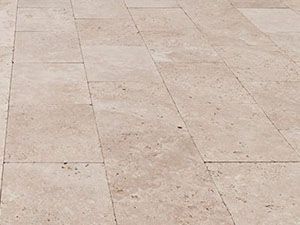 Travertine is a natural stone recognized for its distinctive pores, subtle color variation, and availability in different surface finishes. It is commonly considered for patios, pool surrounds, walkways, and other outdoor areas where homeowners want a lighter, more relaxed stone appearance. A key practical advantage is that travertine tends to remain relatively comfortable underfoot compared with some darker paving surfaces exposed to direct sunlight. It may appeal especially to homeowners planning poolside spaces, courtyards, or outdoor entertaining areas where surface feel and a softer natural-stone aesthetic are important parts of the design.
Read More About Travertine >>
Travertine is a natural stone recognized for its distinctive pores, subtle color variation, and availability in different surface finishes. It is commonly considered for patios, pool surrounds, walkways, and other outdoor areas where homeowners want a lighter, more relaxed stone appearance. A key practical advantage is that travertine tends to remain relatively comfortable underfoot compared with some darker paving surfaces exposed to direct sunlight. It may appeal especially to homeowners planning poolside spaces, courtyards, or outdoor entertaining areas where surface feel and a softer natural-stone aesthetic are important parts of the design.
Read More About Travertine >>
Permeable Pavers
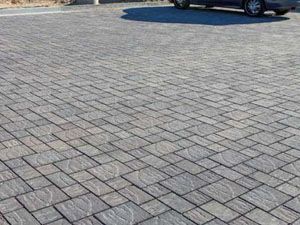 Permeable pavers are part of a paving system designed to allow water to pass through joints or openings rather than simply running across the finished surface. They can be used for driveways, patios, walkways, and other paved areas where stormwater management is an important consideration. Their primary practical advantage is helping reduce surface runoff by allowing water to infiltrate through the pavement system. They may be worth considering for properties with drainage concerns, larger paved areas, or projects where homeowners want to balance usable hardscape with a more water-conscious approach to site design.
Read More About Permeable Pavers >>
Permeable pavers are part of a paving system designed to allow water to pass through joints or openings rather than simply running across the finished surface. They can be used for driveways, patios, walkways, and other paved areas where stormwater management is an important consideration. Their primary practical advantage is helping reduce surface runoff by allowing water to infiltrate through the pavement system. They may be worth considering for properties with drainage concerns, larger paved areas, or projects where homeowners want to balance usable hardscape with a more water-conscious approach to site design.
Read More About Permeable Pavers >>
Bricks
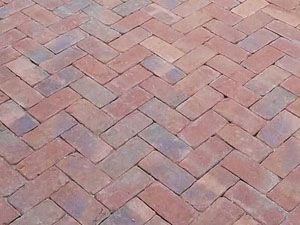 Brick provides a recognizable paving and masonry appearance that works particularly well with traditional homes, established landscapes, and designs that benefit from smaller-scale patterns. Depending on the project, brick can be incorporated into patios, walkways, borders, steps, walls, and other hardscape details. One of its most useful characteristics is the ability to introduce pattern and visual definition without requiring large-format materials. Brick may be a strong choice for homeowners who want new hardscaping to relate naturally to an older home, existing brick architecture, or a landscape design inspired by classic courtyards and garden spaces.
Read More About Bricks >>
Brick provides a recognizable paving and masonry appearance that works particularly well with traditional homes, established landscapes, and designs that benefit from smaller-scale patterns. Depending on the project, brick can be incorporated into patios, walkways, borders, steps, walls, and other hardscape details. One of its most useful characteristics is the ability to introduce pattern and visual definition without requiring large-format materials. Brick may be a strong choice for homeowners who want new hardscaping to relate naturally to an older home, existing brick architecture, or a landscape design inspired by classic courtyards and garden spaces.
Read More About Bricks >>
Natural Stone
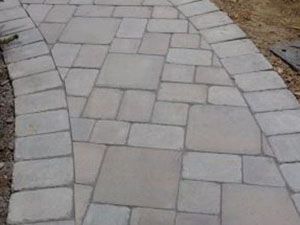 Natural stone is a broad category that can include sandstone, limestone, granite, slate, and other materials, each with different colors, textures, shapes, and performance characteristics. Depending on the stone selected, it can be incorporated into patios, walkways, steps, walls, edging, and landscape accents. Its main advantage is the range of naturally occurring characteristics available, allowing the material to be matched more closely to the property's architecture and setting. Natural stone may suit homeowners who value variation between individual pieces and want their hardscape to feel integrated with the surrounding terrain and landscape.
Read More About Natural Stone >>
Natural stone is a broad category that can include sandstone, limestone, granite, slate, and other materials, each with different colors, textures, shapes, and performance characteristics. Depending on the stone selected, it can be incorporated into patios, walkways, steps, walls, edging, and landscape accents. Its main advantage is the range of naturally occurring characteristics available, allowing the material to be matched more closely to the property's architecture and setting. Natural stone may suit homeowners who value variation between individual pieces and want their hardscape to feel integrated with the surrounding terrain and landscape.
Read More About Natural Stone >>
Cobblestones
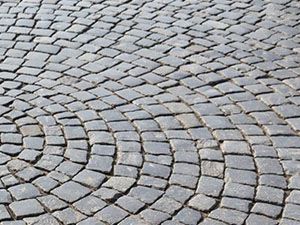 Cobblestones are small-format paving units traditionally associated with historic streets, courtyards, and walkways. Depending on the design, they may be made from natural stone or manufactured materials and installed in a variety of patterns. Their smaller dimensions make them particularly useful for borders, aprons, pathways, accent areas, and surfaces where a strong sense of texture is desired. Cobblestones may appeal to homeowners looking to introduce an Old World or traditional character, distinguish one paved area from another, or add a more detailed visual transition between driveways, walkways, gardens, and other landscape features.
Read More About Cobblestones >>
Cobblestones are small-format paving units traditionally associated with historic streets, courtyards, and walkways. Depending on the design, they may be made from natural stone or manufactured materials and installed in a variety of patterns. Their smaller dimensions make them particularly useful for borders, aprons, pathways, accent areas, and surfaces where a strong sense of texture is desired. Cobblestones may appeal to homeowners looking to introduce an Old World or traditional character, distinguish one paved area from another, or add a more detailed visual transition between driveways, walkways, gardens, and other landscape features.
Read More About Cobblestones >>
Boulders
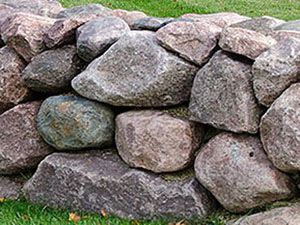 Boulders are large natural stones used as individual landscape elements rather than conventional paving surfaces. They can help anchor planting beds, define changes in elevation, complement retaining features, or create a stronger connection between constructed areas and the natural landscape. Their practical advantage is their substantial scale: a relatively small number of carefully positioned stones can influence the character and structure of a much larger area. Boulders may be especially appropriate for sloped properties, naturalistic landscapes, larger yards, or homeowners who want landscape features that feel integrated with the terrain rather than added as formal architectural elements.
Read More About Boulders >>
Boulders are large natural stones used as individual landscape elements rather than conventional paving surfaces. They can help anchor planting beds, define changes in elevation, complement retaining features, or create a stronger connection between constructed areas and the natural landscape. Their practical advantage is their substantial scale: a relatively small number of carefully positioned stones can influence the character and structure of a much larger area. Boulders may be especially appropriate for sloped properties, naturalistic landscapes, larger yards, or homeowners who want landscape features that feel integrated with the terrain rather than added as formal architectural elements.
Read More About Boulders >>
Walls
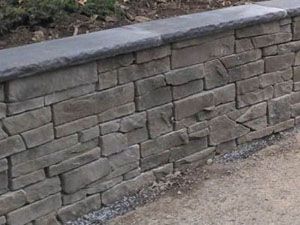 Landscape walls can serve structural, spatial, and architectural purposes depending on their location and design. They may retain soil, manage elevation changes, define planting areas, establish boundaries, provide seating, or separate different parts of an outdoor living space. Their most important practical benefit is the ability to turn changes in grade or undefined areas into more organized and usable sections of the property. Walls are particularly relevant for homeowners dealing with slopes, erosion, elevation transitions, or properties that need clearer outdoor zones. Material and wall type can then be selected around the specific function and surrounding landscape.
Read More About Walls >>
Landscape walls can serve structural, spatial, and architectural purposes depending on their location and design. They may retain soil, manage elevation changes, define planting areas, establish boundaries, provide seating, or separate different parts of an outdoor living space. Their most important practical benefit is the ability to turn changes in grade or undefined areas into more organized and usable sections of the property. Walls are particularly relevant for homeowners dealing with slopes, erosion, elevation transitions, or properties that need clearer outdoor zones. Material and wall type can then be selected around the specific function and surrounding landscape.
Read More About Walls >>
Patios
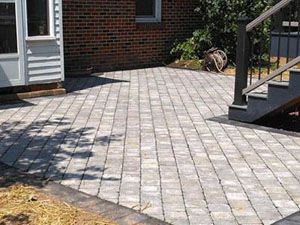 A patio creates a defined outdoor surface for dining, entertaining, relaxing, and connecting the home with the surrounding yard. Patios can be constructed from different paving materials, allowing their appearance and layout to coordinate with the architecture, landscape, and intended use of the space. Their primary advantage is creating a practical outdoor living area from ground that may otherwise have limited everyday use. A patio can suit anything from a compact seating area to a larger backyard gathering space, making it particularly relevant for homeowners who want to spend more time outdoors without building an elevated deck or enclosed addition.
Read More About Patios >>
A patio creates a defined outdoor surface for dining, entertaining, relaxing, and connecting the home with the surrounding yard. Patios can be constructed from different paving materials, allowing their appearance and layout to coordinate with the architecture, landscape, and intended use of the space. Their primary advantage is creating a practical outdoor living area from ground that may otherwise have limited everyday use. A patio can suit anything from a compact seating area to a larger backyard gathering space, making it particularly relevant for homeowners who want to spend more time outdoors without building an elevated deck or enclosed addition.
Read More About Patios >>
Pillars
 Pillars are vertical masonry or stone features used to create definition at entrances, gateways, walls, steps, patios, and other transitions within a landscape. Unlike purely decorative accents, they can help establish visual endpoints and make important areas of a property easier to recognize. Pillars are especially effective where a landscape needs stronger architectural structure, such as at the beginning of a driveway, alongside an entry walk, or at the ends of a wall. They may suit homeowners who want outdoor improvements to relate more closely to the architecture of the house or create a more formal sense of arrival.
Read More About Pillars >>
Pillars are vertical masonry or stone features used to create definition at entrances, gateways, walls, steps, patios, and other transitions within a landscape. Unlike purely decorative accents, they can help establish visual endpoints and make important areas of a property easier to recognize. Pillars are especially effective where a landscape needs stronger architectural structure, such as at the beginning of a driveway, alongside an entry walk, or at the ends of a wall. They may suit homeowners who want outdoor improvements to relate more closely to the architecture of the house or create a more formal sense of arrival.
Read More About Pillars >>
Curbing
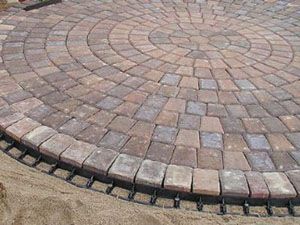 Landscape curbing creates a defined edge between different surfaces or areas of a property, such as lawns, planting beds, driveways, walkways, and landscaped sections. Depending on the application, it can help contain materials, establish cleaner boundaries, and limit movement or erosion along an edge. Its main practical advantage is organization: curbing provides a permanent transition where loose or changing landscape materials might otherwise meet. It may be particularly useful for homeowners with extensive planting beds, sloped sections, gravel or paved areas, or landscapes where maintaining clearly defined borders is important to both appearance and ongoing maintenance.
Read More About Curbing >>
Landscape curbing creates a defined edge between different surfaces or areas of a property, such as lawns, planting beds, driveways, walkways, and landscaped sections. Depending on the application, it can help contain materials, establish cleaner boundaries, and limit movement or erosion along an edge. Its main practical advantage is organization: curbing provides a permanent transition where loose or changing landscape materials might otherwise meet. It may be particularly useful for homeowners with extensive planting beds, sloped sections, gravel or paved areas, or landscapes where maintaining clearly defined borders is important to both appearance and ongoing maintenance.
Read More About Curbing >>
Aprons
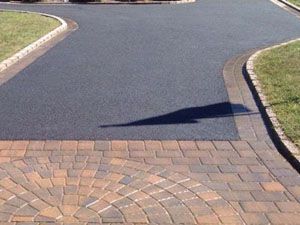 An apron is a defined paved or hardscaped area used to create a transition between adjoining surfaces or structures. Depending on the property, aprons may be incorporated near driveways, entrances, foundations, pathways, or other areas where one surface needs to meet another cleanly. They can be constructed from concrete, stone, pavers, or materials selected to coordinate with the surrounding hardscape. Their practical value lies in creating a more stable, intentional transition in areas that receive regular use. Aprons may suit homeowners addressing awkward surface changes or looking to give entrances and connection points a more finished appearance.
Read More About Aprons >>
An apron is a defined paved or hardscaped area used to create a transition between adjoining surfaces or structures. Depending on the property, aprons may be incorporated near driveways, entrances, foundations, pathways, or other areas where one surface needs to meet another cleanly. They can be constructed from concrete, stone, pavers, or materials selected to coordinate with the surrounding hardscape. Their practical value lies in creating a more stable, intentional transition in areas that receive regular use. Aprons may suit homeowners addressing awkward surface changes or looking to give entrances and connection points a more finished appearance.
Read More About Aprons >>
Choosing the Right Hardscape Products for Your Property
The right option depends on more than appearance alone. How the area will be used, the architecture of the home, existing landscape materials, drainage, grade changes, maintenance preferences, and the relationship between different outdoor spaces can all influence the choice. Piracci's Landscaping, Inc. can help homeowners compare materials and hardscape features as part of a coordinated landscape plan.For more information or to discuss your property, call 215-541-9202 or use our Online Contact Form to get started.