

Landscaping and Hardscaping Services
Every property across Eastern Pennsylvania handles water, weight, and weather a little differently, and that's really the starting point for everything below. Ten areas of work, all connected, covering a property from the ground up. Start with whatever's bothering you about your yard right now, or read through the whole list to see how the pieces fit together before you call.
30 Years in Eastern PA
Same owner-led crew since day one
Licensed & Fully Insured
Matt Piracci, on Every Job
The owner designs and oversees each project himself
Hardscaping
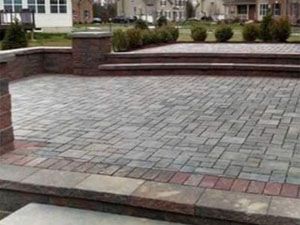
Hardscaping covers everything on your property that isn't alive: the walls, walkways, and structural stonework holding a landscape together through Pennsylvania's freeze-thaw winters and the runoff that follows them. Get it right and you have a yard that still looks intentional a decade from now. Get it wrong and you're rebuilding within a few seasons. We build it in three layers: structural stone that manages grade and slope, natural stone that gives a property its character, and the architectural details that make a finished space feel complete.
Read More About Hardscaping >>Retaining Walls
Slopes don't stay put on their own, not in soil that freezes and thaws every winter. A retaining wall holds that grade permanently, built from concrete block, boulder, natural stone, or stone veneer depending on the look and load you need. We handle the drainage and base work underneath, the part nobody sees and the reason most walls eventually fail.
Read More About Retaining Walls >>Natural Stone
No two natural stone installations look alike, and that's the point of choosing it. Sandstone brings warmth and slip resistance to a patio. Slate holds up on walkways and retaining walls. Bluestone works almost anywhere pavers do. We source the stone for the specific job, since a pool surround needs different footing than a garden wall.
Read More About Natural Stone >>Architectural Elements
The details finish a landscape the way trim finishes a room. Fountains, custom pottery, statuary, columns, and stone veneer aren't structural, but they're often what a visitor notices first. We bring these into the design conversation from the start, not as an afterthought added once the hardscaping is already finished, because that's usually when they look like one.
Read More About Architectural Elements >>Pavers
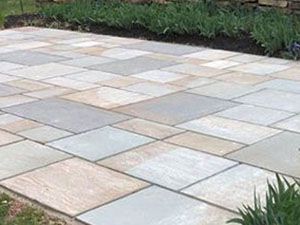
Pavers give you design flexibility that poured concrete can't match: colors, patterns, and textures that adapt to a modern build or a farmhouse from another century equally well. What keeps them looking good in this region is what happens underneath, a compacted base and edge restraint system that flexes with the ground instead of cracking against it. A cracked slab means a full replacement. A damaged section of pavers gets lifted, fixed, and reset, often in an afternoon. We install four types, each built for a different kind of wear.
Read More About Pavers >>Patio Pavers
A patio is the room you build outdoors, so it deserves the same thought a real room gets. We plan how people will sit, walk, and gather in the space before a single paver goes down, then move to base prep and material choice. The result works for dinner parties and quiet mornings alike.
Read More About Patio Pavers >>Walkway Pavers
A walkway has one job: get people where they're going without a puddle, a trip hazard, or a patch of ice in February. Ours are set with the grading and joint spacing to shed water on their own, then laid in a pattern, straight and formal or curved and casual, that matches the rest of your property.
Read More About Walkway Pavers >>Driveway Pavers
Asphalt cracks as Pennsylvania ground shifts through winter, and poured concrete eventually does the same. Pavers flex with that movement instead, and if a section ever settles, we lift it, fix what's underneath, and reset it rather than replacing the whole driveway. Concrete, brick, natural stone, or cobblestone changes the look, not the durability.
Read More About Driveway Pavers >>Deck Pavers
This is a material decision as much as a design one: pavers built to stay cool and slip resistant around water, exactly the environment a pool or hot tub deck creates. Textured and available in enough colors to match whatever's already on your property, they hold their footing wet or dry, which matters most back there.
Read More About Deck Pavers >>Outdoor Living
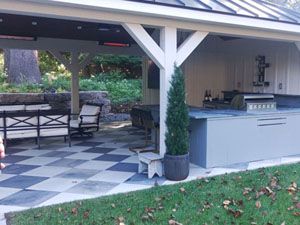
The backyard is no longer just a lawn. It's where dinner happens, where the game gets watched, where people spend their evenings once the weather allows it, which in this region is most of the year if the space is built for it. That's the real design question behind outdoor living: not what looks good in a photo, but what still gets used in October. We build around four features that make that happen: water, fire, cooking, and the surface underneath all of it.
Read More About Outdoor Living >>Pool Decks
The deck does more work than the pool. It's what you stand, walk, and lounge on. Wood brings warmth for above ground pools. Concrete pavers balance durability with design flexibility for everything else. Natural stone like limestone or slate adds a permanence that suits an established landscape, and the right choice depends on how the rest of your yard is built.
Read More About Pool Decks >>Outdoor Kitchens
An outdoor kitchen only works if it sits the way an indoor one would, close enough for easy trips inside, but angled so smoke and heat drift away from the seating area. We build the structure first: counters, storage, and utility runs for gas and power. What goes on top, grill or pizza oven, is your call.
Read More About Outdoor Kitchens >>Outdoor Fireplaces
This is the anchor for a patio: a permanent, engineered structure with its own footing, a fire rated core, and a chimney if needed. It's built into the layout from the start, not placed after the fact, framing one side of a seating area the way a fireplace frames a living room. Wood burning or gas, the structure stays the same.
Read More About Outdoor Fireplaces >>Outdoor Fire Pits
Where a fireplace anchors a space, a fire pit centers one: round or square, sized to the patio, placed so people end up sitting around it instead of near it. There's less structure involved and more flexibility in where it goes, which is why fire pits often come first in a backyard plan, with a fireplace added once the layout is set.
Read More About Outdoor Fire Pits >>Landscaping
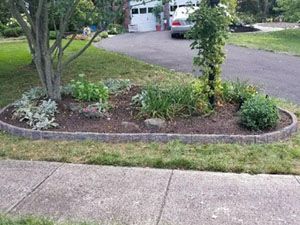
Once the stonework is finished, the space around it still has to become a landscape, not a construction site with a few plants dropped on top afterward. On properties with mature trees, sloped yards, or drainage that's never quite worked, that's a bigger job than most people expect. Right plant, right spot, right depth, with the growth five years out already factored into the plan. We handle that planning, the physical installation, and the after dark lighting that extends how late a yard gets used.
Read More About Landscaping >>Landscape Design
This is the planning stage, and it starts with a walk around your property, not a template. We look at sun, soil, slope, and how you use the space before a single plant gets chosen, then hand you drawings showing what it'll look like at year one and year five, because plants grow and the plan should already account for it.
Read More About Landscape Design >>Landscape Lighting
The goal isn't brightness. It's knowing what to light and what to leave alone. Path lights guide movement without glare. Accent lighting picks out a tree or a stone wall worth noticing after dark. Step lights solve a safety problem before it becomes one. Layered together, they extend how late a patio or pool area gets used.
Read More About Landscape Lighting >>Landscape Contractor
This is less a service than a relationship: one licensed contractor accountable for the whole property instead of separate crews you have to coordinate yourself. We pull permits, schedule the trades, and stand behind the finished result as a single point of contact, which matters most on projects that touch grading, hardscape, and planting all at once.
Read More About Landscape Contractor >>Landscape Installation
Once a plan exists, someone has to build it: grading corrected, sod or beds installed, hardscape and softscape sequenced so one trade doesn't undo another's work. That coordination is the actual job. Masons, planting crews, and drainage work move in the right order, on a property that still has to stay usable while it's happening.
Read More About Landscape Installation >>Earthworks
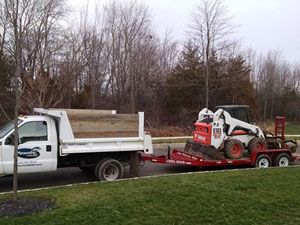
Before anything visible goes in, the ground itself has to be shaped, moved, and corrected. That decides whether water leaves your property or sits on it, and whether a slope stays put or slides. Most homeowners never think about this stage until it's already gone wrong: a wet basement, a washed out bed, a stream bank that's eroded onto the neighbor's property. We handle four pieces of that puzzle, each solving a different version of the same problem, water going somewhere it shouldn't.
Read More About Earthworks >>Erosion Control
Bare, disturbed soil doesn't stay where it's put. A hard rain moves it downhill, onto sidewalks, into storm drains, or straight onto a neighbor's lot. We install containment during construction, before that happens, and slope stabilization after, using native plantings, coconut fiber logs, or gabion baskets depending on the slope and how much water crosses it.
Read More About Erosion Control >>Waterproofing
This is the exterior half of keeping water out of a structure: sealants, membranes, and grading around retaining walls, patios, and foundations that stop moisture before it reaches a wall. It's different from basement waterproofing, which deals with water that's already found its way inside. This is about never letting it get that far.
Read More About Waterproofing >>Stream Restoration
A shifting stream bank or a failing bridge footing rarely announces itself until repair costs have already multiplied. We stabilize embankments, repair rip rap and gabion structures, and correct stream flow that's cutting toward a foundation or a neighboring property, handling the permits and inspections that come with any work this close to a waterway.
Read More About Stream Restoration >>Stormwater Management
Rain gardens, bioswales, and permeable paving do something traditional drainage can't. They slow water down and let it soak in, instead of just moving it somewhere else fast, which matters for the property next to yours as much as your own. We design these features to look intentional, not utilitarian, so a planted rain garden reads as landscaping.
Read More About Stormwater Management >>Drainage
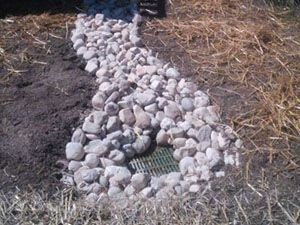
Most drainage problems aren't visible until they've already caused damage: a soggy lawn, water against a foundation, a patio that puddles every time it rains. We fix it with whatever system actually matches the problem. French drains for saturated soil. Catch basins where water collects fast. Downspout extensions that move roof runoff away from the house. Subsurface systems for clay heavy yards that never seem to dry out. Every solution starts with the same site walk, watching where water actually goes rather than where a drawing says it should.
Read More About Drainage >>Grading
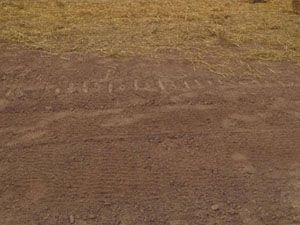
Everything else on a property depends on this being right first. Grading sets the elevations and slopes that decide which way water moves, whether a patio settles evenly, and whether a lawn drains or drowns after a storm. We walk the site, map the low spots and compacted zones, then move and compact soil until the contours send water where it should go, away from the house, off paved surfaces, and clear of planting beds. Skip this step and every project built on top of it inherits the problem.
Read More About Grading >>Basement Waterproofing
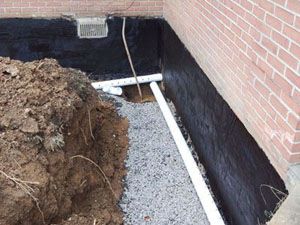
A damp basement rarely announces itself as a foundation problem. It shows up as a musty smell, a white powder on the block walls, or a puddle after a heavy storm, and by the time you notice it, water has found its way in more than once. We inspect the basement and the grading outside it together, then combine exterior sealants, interior drainage and sump systems, and crack repair as needed, instead of treating it as one fix. Humidity control comes last, once the water source is gone, not before.
Read More About Basement Waterproofing >>Masonry
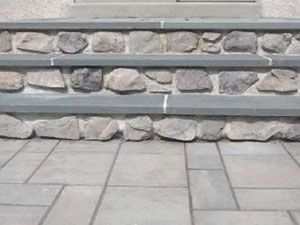
Behind a lot of what reads as design work, there's a structural craft holding it up. Masonry is what makes a retaining wall load bearing instead of decorative, and a fireplace safe to actually build a fire in. Brick, block, and stone each behave differently under weight, moisture, and Pennsylvania's freeze-thaw cycles, so material choice depends on what the structure has to do, not just what it should look like. We build the walls, patios, fireplaces, and outdoor kitchens that depend on getting this part right.
Read More About Masonry >>Project Management
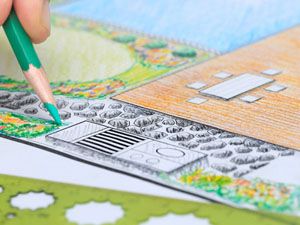
A backyard project that involves grading, masonry, planting, and drainage isn't one job. It's four or five trades that need to happen in the right order, on a site that still has to stay accessible while work is underway. We're the single point of contact across all of it: scheduling, permits, inspections, and the daily judgment calls that come up once excavation starts and the plan meets real soil. That coordination is invisible when it works and expensive when it doesn't, which is the whole reason it's a separate discipline.
Read More About Project Management >>Ready to Start Your Project?
That's the full picture, ten areas of work that all connect to the same goal: a property that looks right and holds up under real Pennsylvania weather, not just the day it's finished. Most projects touch two or three of these areas at once, which is exactly why it helps to talk to one team instead of piecing it together yourself. Tell us what's not working, or what you're picturing, and we'll tell you honestly what it takes to get there.